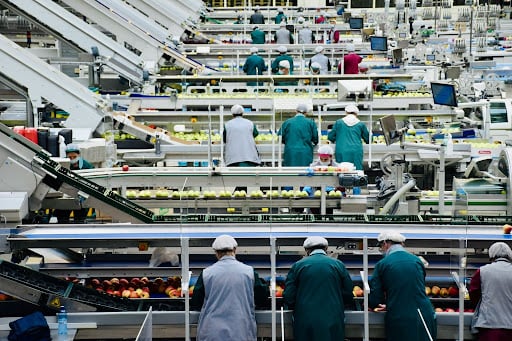

Manufacturers are hiring faster than ever. Faced with ongoing labor shortages and persistent turnover, companies have doubled down on recruitment to keep production moving. The assumption is straightforward: more workers should translate into more output.
But on the factory floor, that equation is starting to break down.
Even as hiring accelerates, production is not keeping pace. Output remains inconsistent, bottlenecks persist, and teams continue to rely heavily on experienced workers to maintain performance. The issue is not simply how many people companies can bring in. It’s how long it takes for those people to become truly productive once they arrive.
This gap points to a metric that most organizations are not actively tracking: time-to-productivity.
Unlike hiring speed or onboarding completion, time-to-productivity measures how quickly a new worker can contribute meaningful, reliable output. It reflects not just whether someone has been trained, but whether they can execute tasks with accuracy, consistency, and confidence. While hiring is visible and easily measured, the lag between onboarding and full performance often goes unnoticed, yet it carries significant operational weight.
After a new hire joins the floor, there is an extended period where productivity is limited. Workers are learning processes, interpreting instructions, and relying on others for guidance. During this time, output is slower, error rates are higher, and experienced employees are pulled away from their own responsibilities to provide support. This creates a hidden drag on the system, one that compounds with every new hire added to the workforce.
Traditional training methods play a significant role in this delay. Many manufacturing environments still rely on shadowing, static documentation, and informal knowledge transfer to prepare workers for their roles. While these approaches were effective in more stable environments, they struggle to keep up with the complexity of modern production. Products change more frequently, processes evolve rapidly, and the volume of information workers must absorb has increased dramatically.
As a result, training does not necessarily translate into readiness. Workers may complete onboarding, but still lack the clarity needed to perform at full capacity. They are left to interpret instructions, navigate fragmented information, and learn through trial and error. This extends the time it takes to reach consistent performance and increases variability across teams and shifts.
The operational cost of this delay is often underestimated. Every new hire carries a temporary productivity deficit, one that affects output, quality, and efficiency. Errors lead to rework, inconsistent execution impacts product quality, and reliance on experienced workers reduces overall system capacity. In this context, companies are not just investing in labor, they are absorbing the cost of delayed performance.
Addressing this issue requires a shift in how organizations think about workforce enablement. Instead of focusing solely on improving training, a growing number of manufacturers are looking at how to reduce the time between onboarding and execution. The goal is not just to teach workers faster, but to enable them to perform effectively from the start.

This is where execution-driven systems are beginning to reshape the conversation. By translating complex engineering and operational data into structured, step-by-step workflows, these systems provide workers with clear, real-time guidance at the point of work. Rather than relying on memory or interpretation, workers can follow processes that are directly aligned with current product definitions and requirements.
Companies like Canvas Envision, led by CEO Garth Coleman, are working within this space, focusing on how AI can help transform static information into interactive workflows that support execution as it happens. The emphasis is not on adding more training, but on reducing the gap between knowledge and action.
When time-to-productivity is reduced, the impact is immediate. New workers become effective more quickly, output stabilizes, and teams are less dependent on a small group of experienced employees. Performance becomes more predictable, and organizations are better equipped to scale without sacrificing quality.
As manufacturing continues to evolve, the ability to activate productivity quickly is becoming a defining advantage. Hiring will always matter, but it is no longer the primary constraint.
In today’s environment, the companies that win will not be those that bring in the most people, they will be the ones that enable those people to perform, faster and more consistently, from day one.