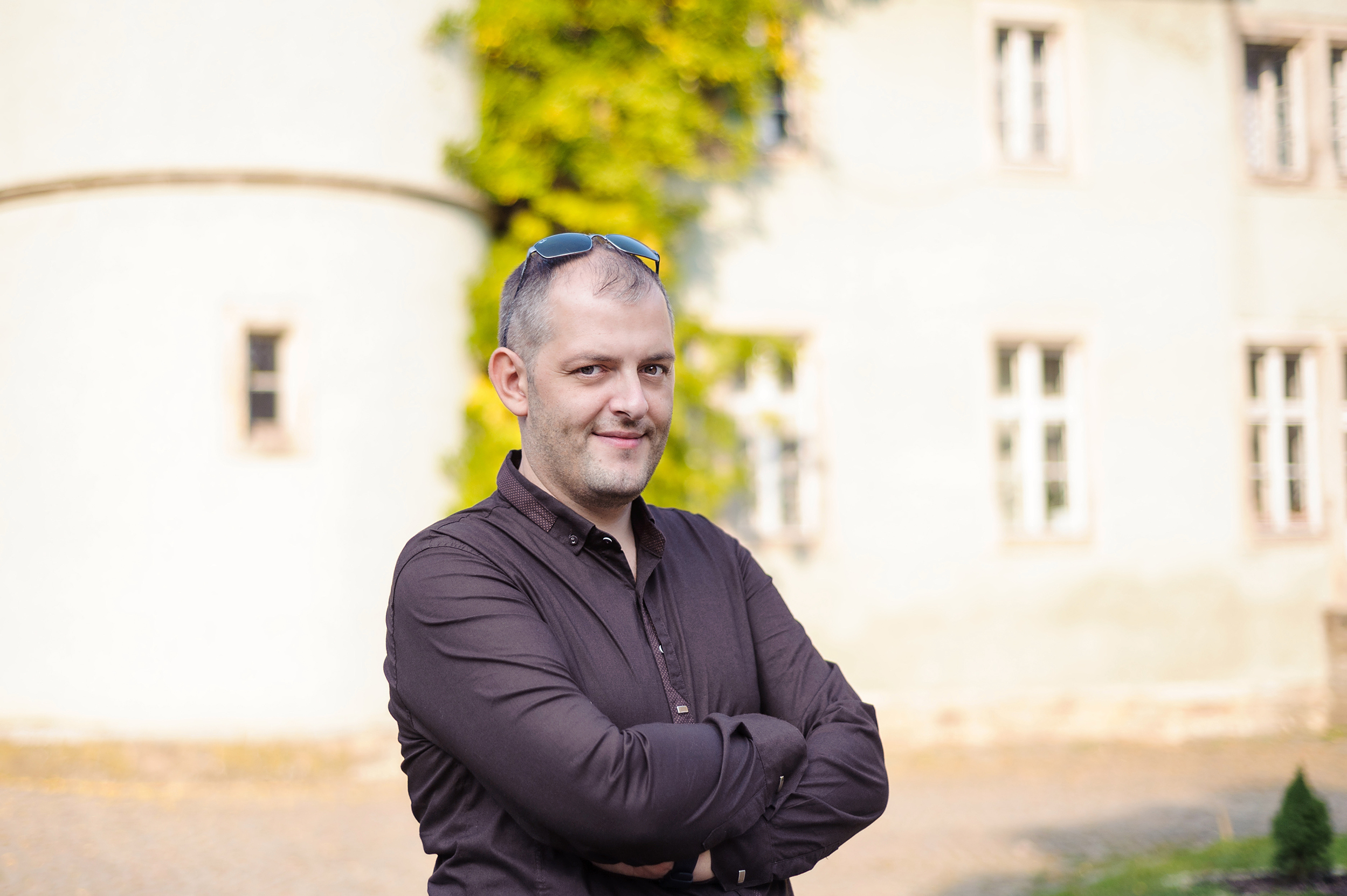
There was a time when cosmetic surgery was expected to produce a noticeable “before and after.” The tighter jawline, smoother skin or dramatically younger-looking face was, in some ways, the point.
For a growing number of men, particularly executives and professionals, the ideal outcome may now be exactly the opposite.
They don’t necessarily want colleagues walking into a Monday morning meeting and asking what they had done. They may prefer to hear that they look rested, healthy or refreshed or perhaps hear nothing at all.
That desire for subtlety is helping reshape the conversation around the male facelift. Rather than pursuing dramatic transformation or attempting to erase every visible sign of age, some men are seeking results that preserve the characteristics that make their faces look mature and masculine while quietly addressing the changes that bother them.
In the world of the Business Face, discretion may be becoming its own kind of status symbol.
Men Are Still a Minority of Facelift Patients, but the Numbers Are Significant
Cosmetic surgery remains considerably more common among women, but men represent a meaningful and evolving segment of the market.
According to the American Society of Plastic Surgeons’ 2024 statistics, men underwent 98,798 cosmetic surgical procedures performed by ASPS member surgeons. Of those, 5,819 were facelifts, 15,351 were eyelid surgeries and 2,773 were neck lifts. Men accounted for approximately 7% of facelifts and 12% of neck lifts included in the report.
Those percentages are still relatively small, but the medical literature has been paying increasing attention to something more interesting than volume alone: a male facelift isn’t simply a female facelift performed on a man.
A 2022 review published in Clinics in Plastic Surgery noted that surgeons increasingly recognize meaningful differences between male and female facial aesthetics. The authors wrote that male patients generally seek somewhat different outcomes and described the evolution of techniques intended to rejuvenate the male face while preserving a natural, masculine appearance without obvious signs of surgery.
That distinction is at the heart of how the male facelift is changing.
The Goal Isn’t Necessarily to Remove Every Sign of Age
For many men, maturity is part of the face they want to keep.
A 55- or 60-year-old executive may value the stronger jaw, facial character, gray hair or lines that reflect his age and experience. He may have no interest in emerging from surgery looking dramatically younger or dramatically different.
Dr. Douglas Steinbrech has spent much of his career studying and practicing male aesthetic surgery. He is the author of Male Aesthetic Plastic Surgery, a 614-page medical reference devoted specifically to male aesthetic procedures, including facelifts, eyelid surgery, chin augmentation, facial fat grafting and other male facial techniques. Steinbrech currently serves as Treasurer/Secretary of The Aesthetic Society, whose current leadership roster lists him among its executive officers.
His work reflects a larger development within the specialty: recognizing that preserving identity can be just as important as creating change.
“The goal isn’t to give a man a different face. It’s to preserve the character and maturity that make him recognizable while refining the areas that concern him. The best result is often one where people think you look good but can’t quite tell why.” Dr. Steinbrech said.
Masculinity Changes the Surgical Equation
There are anatomical reasons male facial surgery requires its own planning.
Male faces can differ in skin thickness, facial-hair distribution, hairline patterns, underlying structures and aesthetic proportions. A recent review of deep-plane facelift techniques in male patients described differences including denser subcutaneous tissue, increased vascularity and structural characteristics that require surgical planning specifically designed to preserve masculine facial definition.
Even seemingly small considerations matter. Facial hair can affect where incisions are placed. Hairlines and sideburns need to be considered so they aren’t unnaturally repositioned. Older surgical literature on male facelifts identified preservation of the normal hairline and careful management of beard-bearing skin as particular technical considerations in male patients.
But perhaps the most interesting difference involves the desired shape of the face itself.
A three-dimensional simulation study involving 262 evaluators compared different facelift approaches. Researchers found that a male-specific lifting concept was associated with greater perceptions of masculinity and attractiveness in male faces, while a more conventional lifting pattern was associated with greater femininity and youthfulness. The authors concluded that the findings supported a more gender-specific approach to facelift planning.
In other words, making a male face appear younger isn’t necessarily the same thing as making it look better according to the patient’s goals.
According to Dr. Steinbrech, “You can’t approach every face with the same definition of what looks youthful or attractive. With men, preserving the jawline, facial proportions, hairline and other masculine characteristics is critical. The goal isn’t simply to make someone look younger. I’s to rejuvenate the face without taking away the features that make it distinctly his.”
The Rise of “Undetectable” Work
Subtle cosmetic work isn’t unique to men, but it appears particularly compatible with what many male patients say they want.
The American Society of Plastic Surgeons recently described an emerging preference among male patients for what some surgeons call “undetectable work”. Refinement that leaves a patient looking refreshed while preserving the features that make him recognizable. The trend reflects a broader move away from obvious transformation and toward results that don’t immediately announce cosmetic intervention.
That may have particular appeal to someone whose appearance is closely connected to his professional identity.
Consider an executive who regularly meets clients, employees or investors. A salesperson who sees the same customers every week. An attorney who appears in court. An entrepreneur who serves as the public face of his company.
For those men, dramatic change can create its own problem. They may want to address facial aging without having the treatment itself become the conversation.
That creates an interesting twist in the Business Face era. The traditional status symbol was something recognizable: the expensive watch, tailored suit or luxury car. In aesthetics, status may increasingly be associated with restraint.
The result is successful precisely because people can’t identify it.
Looking “Done” Can Defeat the Purpose
The desire for subtlety also creates an important medical challenge.
A patient can ask for natural results, but “natural” isn’t a procedure. It’s an outcome that depends on anatomy, surgical planning, technique, expectations and judgment.

Steinbrech’s professional profile with The Aesthetic Society describes his practice philosophy as emphasizing minimally invasive aesthetic techniques, smaller and well-hidden incisions and natural results. His textbook similarly emphasizes that male aesthetic surgery requires a male-centric approach rather than simply adapting assumptions developed around female patients.
That doesn’t mean less surgery is automatically better surgery, or that every patient is an appropriate candidate for a particular technique. A facelift is still surgery, with recovery, risks and limitations that need to be discussed with a qualified physician.
It also can’t stop aging. Even an excellent result exists within a face that will continue to change over time.
“Restraint is an important part of facial rejuvenation. The goal isn’t to erase every sign of aging. It’s to understand which changes will make a meaningful difference while preserving the features that give a face its character. Sometimes the most important surgical decision is knowing what to leave alone.” Dr. Steinbrech stated.
That may be particularly relevant for professional men whose maturity is part of their identity. Erase too much character and the result can work against the original goal.
There Is Also a Danger in Making “Undetectable” the New Expectation
The movement toward subtlety sounds inherently positive, but it deserves its own caveat.
If cosmetic work becomes increasingly difficult to detect, it can also distort our understanding of what natural aging actually looks like.
Someone may look at a 60-year-old executive with an unusually sharp jawline and assume he simply “ages well,” without knowing that aesthetic treatment played a role. Multiply that across celebrities, business leaders and social media, and the baseline for what people believe 50, 60 or 70 is supposed to look like can quietly shift.
That creates a different kind of appearance pressure. The goal shouldn’t be to establish a new professional expectation in which successful men are supposed to age, but only in ways nobody can see.
Aesthetic treatment remains a personal decision, not part of the job description. And subtle surgery is still surgery.
When Nobody Notices, Is That the Point?
Perhaps the changing male facelift says something larger about how men’s attitudes toward appearance are evolving.
For years, cosmetic surgery was associated with visible transformation and, often, secrecy. Today, men are increasingly participating in conversations about skincare, fitness, hair restoration, injectables and surgery while simultaneously asking for results that don’t fundamentally alter how they look.
That’s not necessarily contradictory. It may simply represent a different definition of successful treatment.
For the professional man thinking about his Business Face, the objective may not be to walk into the office looking 15 years younger. It may be to walk in looking like himself. Recognizable, experienced and mature. Without the features that had begun to bother him.
The modern male facelift, then, isn’t necessarily about how much a surgeon can change. Increasingly, it may be about how much can be preserved. And perhaps that’s why subtlety has become so valuable: the ultimate compliment may no longer be, “You look younger.” It may simply be: “You look good.”