
Evolution of the Liver Cancer Therapeutics Market Driven by Rising Global Burden
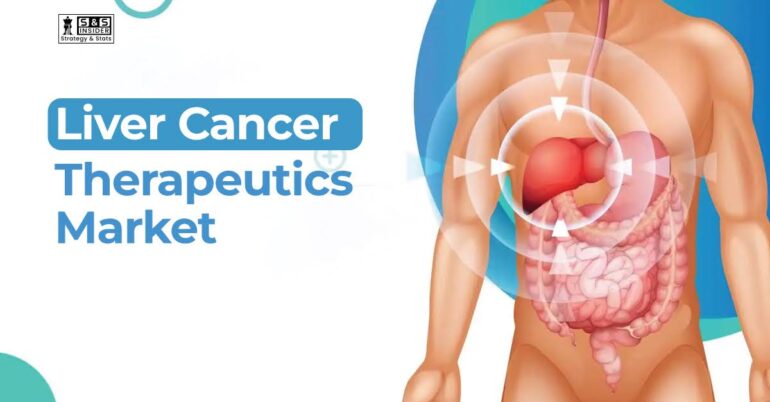
The liver cancer therapeutics market is undergoing a major transformation shaped by increasing patient needs and rapidly advancing research. With 905,677 incident cases and over 830,000 global deaths recorded in 2023, liver cancer remains one of the most challenging malignancies worldwide. Chronic hepatitis B and C infections, alcohol consumption, and non-alcoholic fatty liver disease continue to elevate global disease burden, positioning liver cancer as the sixth most common cancer. Projections suggest that newly diagnosed cases will reach 1.4 million annually by 2040, intensifying the need for effective and accessible therapies.
As clinical complexity rises, pharmaceutical companies, research institutions, and healthcare systems are prioritizing advanced treatment strategies that improve survival outcomes and address previously unmet clinical challenges. This rapidly evolving ecosystem is directly boosting the liver cancer therapeutics market and reinforcing its long-term growth trajectory.
Next-Generation Therapies Redefine Standards of Care in Liver Cancer Treatment
Major advances in therapeutic science have set the stage for unprecedented progress in the liver cancer therapeutics market. Targeted therapies such as sorafenib and lenvatinib continue to play essential roles in managing advanced hepatocellular carcinoma (HCC). However, the introduction of groundbreaking immune checkpoint inhibitors has fundamentally changed first-line treatment approaches.
Atezolizumab-bevacizumab combinations have demonstrated superior survival benefits compared to traditional regimens, accelerating clinical adoption worldwide. The year 2023 marked a milestone with the FDA’s accelerated approvals of durvalumab and tremelimumab, further expanding treatment options for unresectable liver cancer. These approvals reflect a broader shift toward personalized, mechanism-driven therapies tailored to individual tumor biology.
Combination strategies integrating targeted therapy with immunotherapy are gaining traction, supported by clinical evidence showing enhanced efficacy and improved patient outcomes. In parallel, innovations in molecular diagnostics and genomic profiling allow oncologists to identify actionable biomarkers and optimize therapeutic response. The diagnostic advancement is strengthening decision-making frameworks and elevating the liver cancer therapeutics market value.
Pipeline Advancements and Novel Modalities Signal the Future of Liver Cancer Care
The liver cancer therapeutics market is positioned for a transformative decade as next-generation drug development accelerates. Emerging modalities such as CAR-T cell therapy, bispecific antibodies, and engineered immune molecules are gaining momentum in clinical trials. These therapies aim to overcome treatment resistance and deliver durable responses, especially for advanced or refractory liver cancer.
Pharmaceutical companies are investing heavily in platforms that enhance immune activation, tumor targeting, and personalized treatment design. As the global research landscape expands, collaborations between biotech innovators and large-scale pharmaceutical manufacturers are expected to fast-track regulatory approvals and commercial availability. With precision oncology at the forefront, the market will experience exponential growth throughout the forecast period.
Key Growth Drivers Strengthening the Liver Cancer Therapeutics Market
Several foundational drivers are shaping the upward trajectory of the liver cancer therapeutics market. Rapidly increasing disease prevalence, particularly in Asia-Pacific and Europe, continues to accelerate treatment demand. Expanding applications of immunotherapy, rising clinical success rates of targeted agents, and heightened FDA approvals contribute to strong market penetration.
Growing awareness of early diagnosis and improved access to advanced medical technologies also enhance treatment uptake. Investments in precision diagnostics, genomic testing, and liquid biopsies are enabling clinicians to deliver more accurate and personalized therapies. Pharmaceutical companies are scaling their R&D pipelines to meet evolving patient needs, further supporting global market expansion.
Key Restraints Hindering Pace of Adoption in High-Burden Regions
Despite strong progress, the liver cancer therapeutics market faces several barriers that constrain global adoption. High therapy costs and limited access to immunotherapy remain major challenges, especially in low-income regions. Resistance mechanisms associated with targeted therapies and limited biomarker validation also restrict clinical success in certain patient groups.
Complex regulatory frameworks, slow clinical adoption of emerging modalities, and disparities in diagnostic infrastructure continue to pose hurdles. While innovation is accelerating, equitable access remains a critical area for improvement.
Opportunities and Challenges as the Industry Moves Toward Precision Medicine
The emergence of precision medicine presents tremendous opportunity for the liver cancer therapeutics market. Growth in companion diagnostics, biomarker-driven treatment selection, and advanced imaging technologies will pave the way for highly personalized care. Expanding reimbursement policies, strategic partnerships, and AI-driven decision support tools represent additional growth routes.

Challenges persist in developing scalable manufacturing platforms for complex immunotherapies, ensuring regulatory alignment across global regions, and achieving consistent therapeutic performance across diverse patient groups. Addressing these challenges will be essential for sustainable market expansion.
Market Segmentation Shaping Therapeutic Adoption Across Regions
Segmentation by therapy type includes targeted therapy, immunotherapy, and chemotherapy, each playing a distinct role in treatment protocols. Type-based segmentation includes hepatocellular carcinoma, cholangiocarcinoma, hepatoblastoma, and other rare liver tumors. Distribution channels span hospital pharmacies, retail pharmacies, and online pharmacy platforms, each influencing accessibility and patient engagement.
Regionally, the liver cancer therapeutics market demonstrates significant momentum in North America, supported by advanced healthcare infrastructure and high adoption of novel therapies. Europe continues to expand through precision oncology initiatives and research partnerships. Asia-Pacific remains the fastest-growing region due to rising disease prevalence, large patient populations, and improving healthcare investments. Emerging markets across Latin America, the Middle East, and Africa are gradually expanding access to advanced oncology care.
Future Outlook: A Decade of Innovation, Integration, and Expanded Access
The next decade will mark a revolutionary phase for the liver cancer therapeutics market as innovation accelerates across immunotherapy, targeted therapy, and cellular therapy. Growth in AI-enabled diagnostics, deeper genomic insights, and drug-device integration will modernize treatment pathways. Global collaborations and expanded clinical trials will bring next-generation therapies closer to commercialization, making liver cancer care more precise, effective, and accessible.
Conclusion: A Transforming Market Poised for Long-Term Global Impact
The liver cancer therapeutics market stands at a pivotal moment, driven by rising global incidence and powerful innovations in treatment science. Advances in immunotherapy, expanding targeted therapy options, and emerging cellular therapies collectively position the market for sustained, long-term growth. With rising investments, accelerated approvals, and a strong clinical pipeline, the industry is ready to deliver transformative outcomes for patients worldwide.