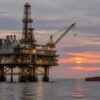
For anyone who works offshore, the math is familiar. A component fails on a platform far from shore. The replacement itself might be inexpensive, but getting it made, shipped and delivered takes time, and every hour of downtime costs money.
Oluseun Taiwo, founder and CEO of Solideon, uses offshore oil rigs as one of the clearest examples of what his company is built for. In places like that, shipping a part can cost far more in lost time than the materials are worth.
Moving the factory to the problem
Solideon builds deployable factories. It takes standard industrial robot arms and runs them with its own software, so that a compact cell can 3D-print metal, machine it, assemble components and inspect the result. The cell is designed to be operated by someone without a robotics or engineering background.
The company says the approach needs no traditional tooling, which it puts at four months or more in conventional manufacturing, and removes more than 90% of the human intervention in the process. For a remote site, the bigger advantage is location: the part is made where it is needed.
Built first for defense
The technology is being proven in demanding conditions. The U.S. Air Force funded a single-pallet manufacturing cell for expeditionary sites through a $1.25 million AFWERX contract. Solideon took part in the Navy’s Trident Warrior 2025 exercise and makes submarine hull sections at Solideon Defense in Norfolk, Virginia.
Taiwo sees defense as the foundation for commercial work, not a detour from it. Military customers need parts in remote, harsh places, under pressure, which is close to what offshore energy operators face every day.

What comes next
Solideon’s deployable units today make parts around the size of a bicycle component or small car part, and the company plans to scale up. It moved its headquarters to Los Angeles in 2026 and says it has raised roughly $9 million to date.
Solideon’s website lists energy alongside aerospace, automotive, maritime and defense as markets it builds for. The common thread is distance: places where the nearest factory is a long way off, and waiting is the most expensive part of the repair.
If a rig crew can describe the part, print it and fit it the same day, the economics of offshore maintenance start to look very different.